

YELLOW WALLPAPER
Only angels and mothers

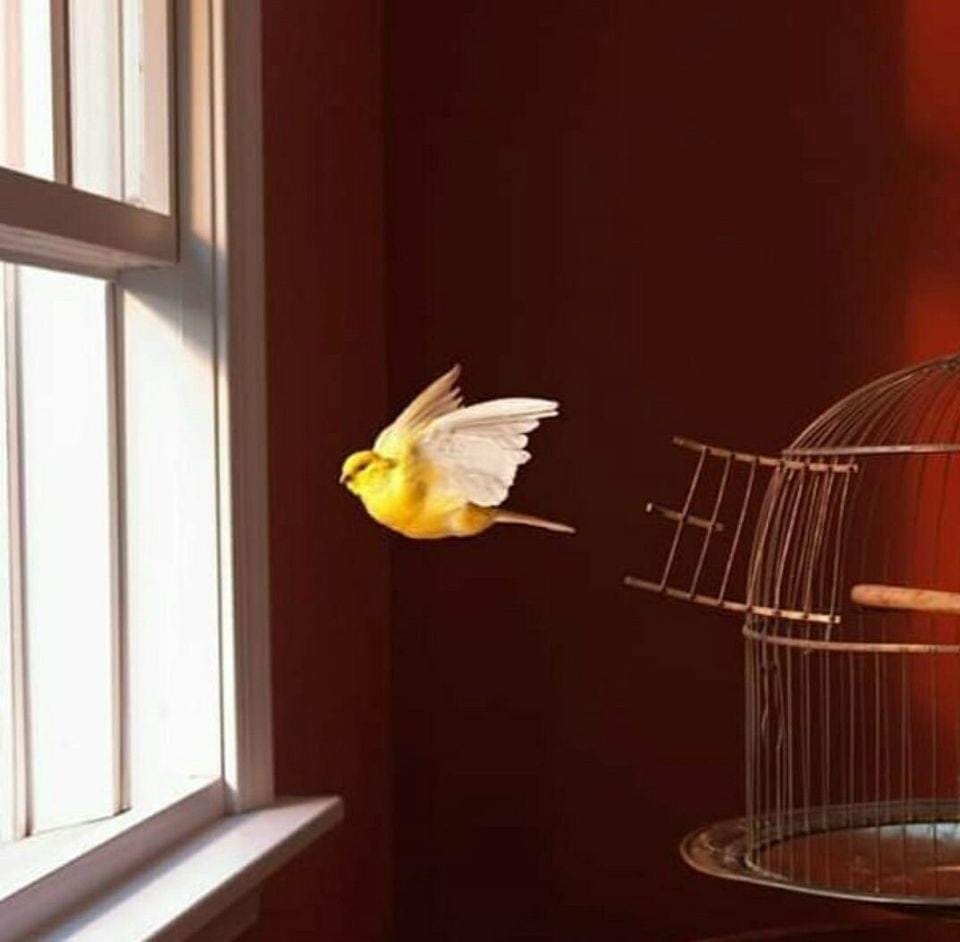
And speaking of birds — why are we so often compared
to them, their wings clipped, their beaks broken.
I know I speak almost glibly of alcoholism in this essay,
as though black holes do not exist — black holes women are shoved in
when they don’t conform to the script.
My grandmother Madolyn sang backup for Peggy Lee once.
She was a pianist, her son a concert violinist.
The bennies she carried in her little purse —
mother’s little helpers, and the night shift paid the rent.
Only angels and women are fallen.
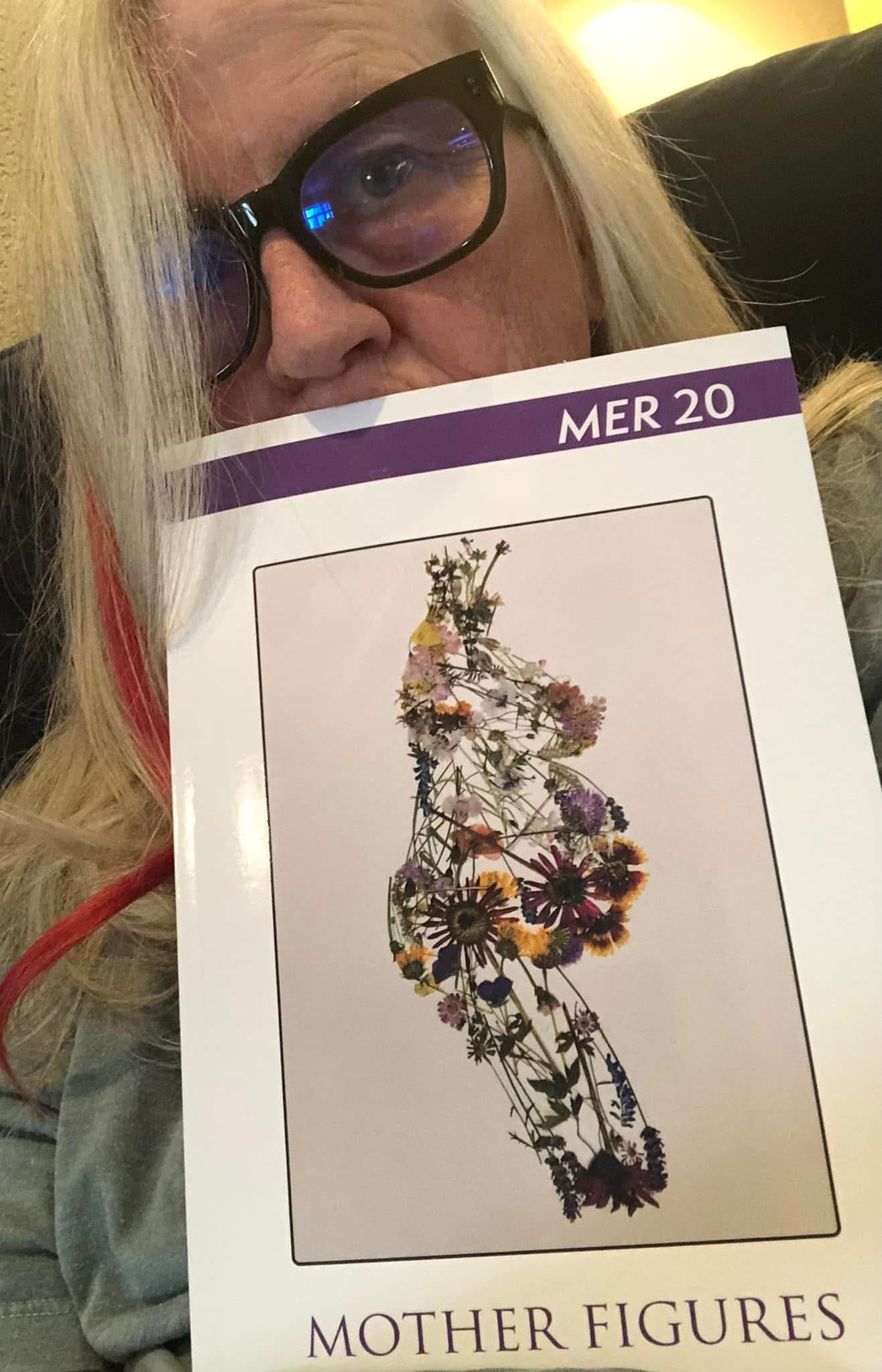
First published in Mom Egg Review, Vol. 20 (2022)
Once, a bird flew into our house, wings a blur, hitting walls and windows trying to escape. “Open the windows!” I yelled. The girls and I chased the bewildered bird until, battered and bruised, it found open air above the kitchen sink. And then we were giddy with relief. In a way, it was like watching myself get sober.
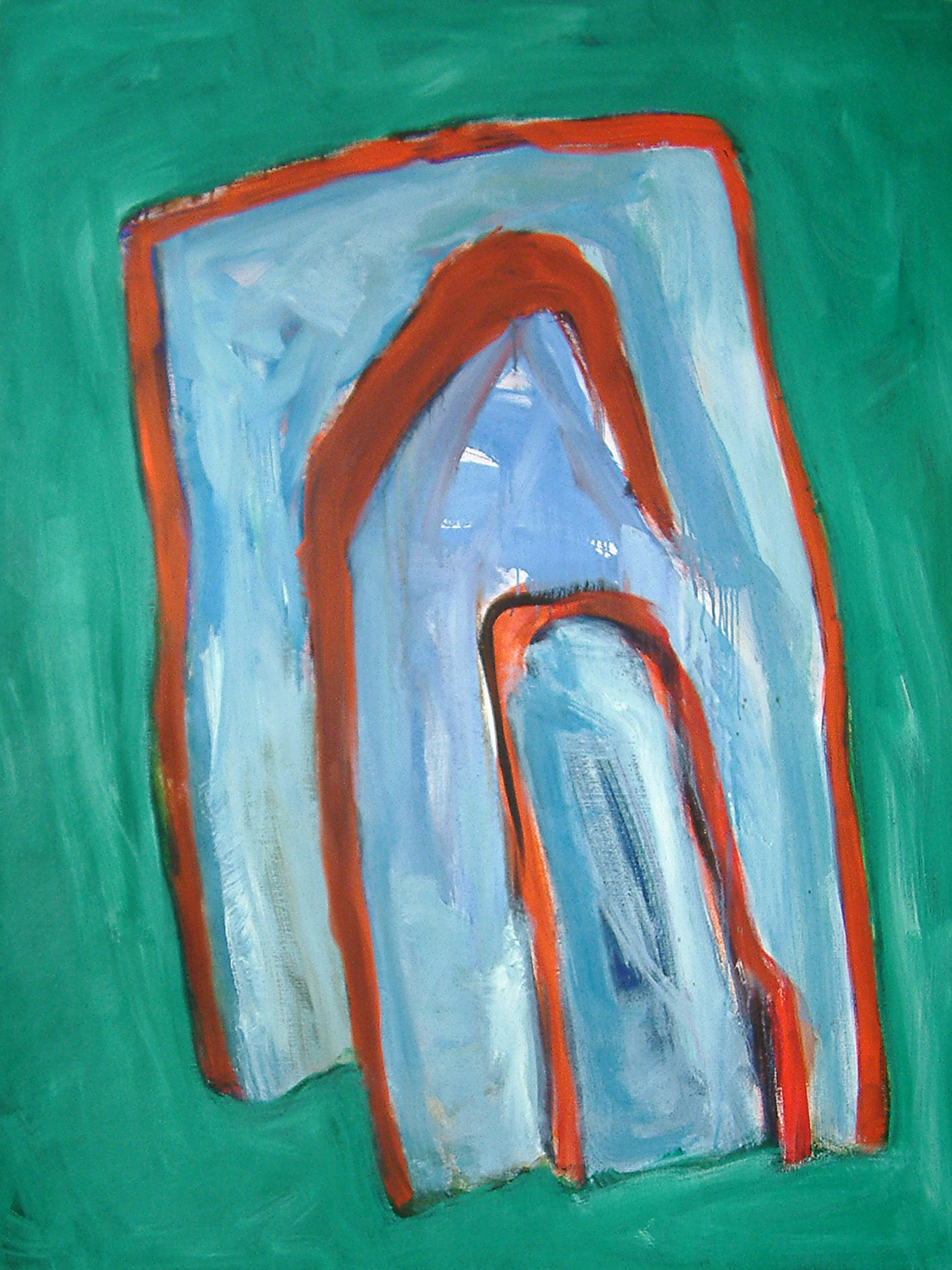
My two daughters rarely, if ever, saw me drink. When I was in treatment, and they attended the family program, they were asked to draw a picture of my alcoholism. They both drew a door. I drank behind it.
They were 11 and 13 when I sobered up with the help of inpatient treatment and the twelve steps. The youngest rebelled against my newly sober attention to her grades, her comings, and goings. My girls were fed, clothed, and cared for, but emotionally I’d been missing. Now, in the absence of substances, my anxieties surfaced.
Like the bird who’d accidentally flown inside, my daughter banged against the walls and windows that I was now determined to keep shut. The open air seemed dangerous.
One night, in defiance, she escaped. I was furious. Late the next day, I heard knocking. On the other side of the locked screen door, stood my girl, the summer evening fading and green behind her.
I didn’t let her in. I was prepared and handed her a grocery sack with some clothing and a Big Book of Alcoholics Anonymous on top.
This is not something I’m proud of though at the time, I thought I was being the mother I had needed as a teen. I would provide tough love. I would draw a line in the sand and my daughter would not make the same mistakes I had.
All my regret and my own interrupted life stood between us, the sound of crickets breaking the silence. She stood, shocked, and holding the grocery bag.
The die was cast. Newly recovering and addiction treatment wise, I had a new religion. I’d rebelled against my mother’s fundamentalist religious cult, but conditioning runs deep. Generations of black and white thinking, and the desperate grip of alcoholism, though it had loosened with sobriety, meant my thinking was disordered. I was trying to stay sober, to find new ground, and now I had the answer.
My daughter’s behavior was alcoholic. I was going to save her.
The pendulum swings and mine swung from rebellion to conforming. Seemingly opposites but the same coin. Turn it from front to back, from back to front and it doesn’t change. Silver coated, cool; it’s weight in the hand stays static. Flip it and call heads or tails. One or the other, the price is the same.
My daughter’s behavior escalated, and I lost all control. She refused curfew, school, or any kind of boundaries. She came and went and if I, or her sister, stood in her way, she was not above physically fighting. I drove her to school where she went in the front and out the back door. I repeatedly called the police, who did little to nothing to help except take a report. Friends urged me to call anyway, create a “paper trail.”
One night she got physical with me when I tried to keep her from leaving, I called again. The same police officer, one who’d responded to multiple calls before, responded again. He towered above us, shiny badge glinting above the pocket of his blue uniform. It was the fifth time in six months I’d called the police for help and maybe his fourth turn responding.
The last time he threatened to take me to jail. Surely, I was to blame, the hysterical mother, impaired parent, failing my civic duty to send my daughter to school, to keep her safe at home. Surely, I was a bad parent. I stood and faced him, held out my wrists, “Take me.”
This time was different. When my daughter, who cursed in his face, defied him, he called social services. She had always acted meek upon his arrival before. “Out of control,” he said into the phone. Then he took her down and, though a grown man trained to do it, it took him a solid five minutes to restrain her.
“Mom, please,” she cried. “I’m sorry. I promise.” I turned my face. “I can’t do this even one more day.” I believed my refusal to give in could save her life, where nothing else I’d tried had gotten through.
My heart hardened. I didn’t relent. Even as I put on her shoes and tied them for her, even if my hands shook.
I believed to let go would be to lose her forever. I was desperate to stop her, to save her from the streets, to get her in school. She wouldn’t give in either, would fight to the end for her right to choose without me.
Hands cuffed behind her back; she didn’t fight now. I tied double-knotted bows like the ones I made for her when she was four, so the strings wouldn’t come untied and trip her.
The police officer, shaken, still angry, escorted her out the door, into the patrol car, and to a shelter for adolescents.
After the door closed behind them, I buried my face against it, as my knees gave way.
What had I done?
It went against everything I knew not to run and stop them, as it had that first time as she stood on the porch not to open the door. But though all I knew said to cave, do anything to keep her close, something deeper, maybe the alcoholic inside, the addict in me that knew the game better than the mother; that part of me said if you don’t say no, if you don’t hold this line for her, the same illness that took you down, that killed your grandmother, that wants to destroy you, will take her too.
A slur on the divine, Marguerite Duras wrote, to describe the shame and stigma projected on alcoholic women, not to mention alcoholic mothers.
My daughter, as I feared, found her way into the bottle, into drugs, and away from me just as I fought and found my own way out. In those early sober years, I couldn’t see the word-cage made of yellow in which I was caught, how like vines the causes and conditions underlying the illness wound their way through my mind and body. I did not yet see the wallpaper, nor the walls. The bottle, as they say, was but a symptom. It took years for my daughter and I to find our way back to each other and into the truth of the divine we are.
Not only the youngest, but eventually both my daughters found their way into and back out of the bottle, into and back out of what they had drawn as a closed door in their childhood.
Some women are born knowing they were meant to fly. The bird who had flown into our home would have beat herself to death against the walls that enclosed her rather than be denied a sky.
As would we. I and my daughters.
ONE THING
On Repeat
I’m still looking for the God for the daughters.
Press the heart so more people can see this. Your support matters. Reach out anytime in my DMs or by email. I love hearing from you. ❤️🔥

Thank you Kelly. Love your writing. I did the grocery bag thing too. 💔
This hits hard. Evocative and visual writing. Thank you.