
The Water’s Edge
Who Let the Riff Raff In? See my AI Policy below😉

Sorry for the double email today. I accidentally triggered an email notice when I hopped on a livestream for a five minute share. Didn’t mean to land in your inbox twice! ♥️
I’m feeling some deep shit, bros.
There are things I don’t write about because I still don’t have words. Or syntax. It’s hard to explain how the words try to form but swirl instead, swirl and swirl. How do I say the unspeakable?
What is the unspeakable I’m trying to say?
Sometimes I read fighting words of outrage and think, Oh, you have no idea.
But how do I give them an idea?
The deepest thing still walled off in the cage of conditioning is this:
INJUSTICE.
I don’t have words for the injustice.
The injustice of what, you may wonder.
The injustice of being misunderstood. The injustice of your voice being silenced. The injustice of being disbelieved. The injustice of a story made of you that even you believed until—one miraculous day—you were released from it and began the hunt for words to make your own.
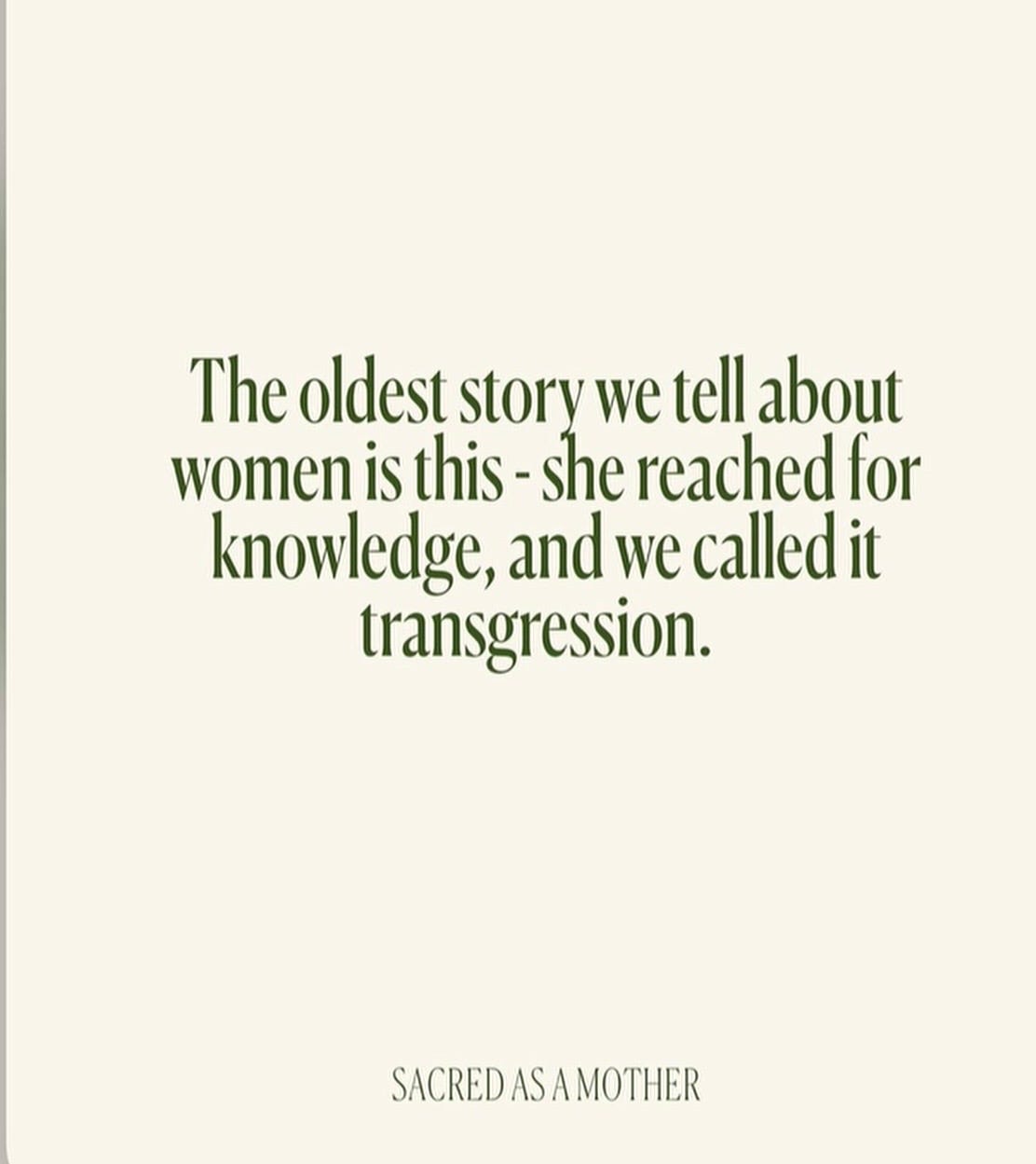
We inherit stories long before we know they’re stories.
My mentor Lidia Yuknavitch would say, “I’m not the story you made of me.”
It was about a decade ago that the story they made of me first reached my consciousness.
Because I believed their story of me, I didn’t know my own—even when I thought I did.
Their story of me was buffered by my denial and delusion. I had unconsciously rewritten it into something I could survive. I thought their story and mine were the same.
First, my own story needed correcting.
But when I finally comprehended what their story of me actually was, I shattered.
Now I realize I chose to believe a kinder story than the one they really told about me. It was self-protection.
Once I began catching these threads of narrative, I started seeing them everywhere.
They were stories I had believed.
I hadn’t even known they were stories.
I thought they were reality.
As Ashley Allen writes of the long-term consequences for second-generation cult survivors:
Second-generation members leave cults in different ways—voluntarily, with family, or by expulsion—and the manner of exit significantly affects recovery. Regardless of how they leave, they lose not only relationships but an entire worldview. Practical barriers such as lack of education, documentation, or social skills compound psychological challenges. Recovery often involves trauma, grief, dependency issues, harsh internalized moral judgments, and profound culture shock as former members attempt to construct identity and meaning in a world they were taught to fear.
I am third generation.
I watch people leaving the 2x2 high-control religious sect I was born and raised in today, many stepping into advocacy and beginning to tell their stories.
I remember that urgency to understand.
What I couldn’t know when I left decades ago was that the deepest consequences wouldn’t reveal themselves all at once. Some took decades to become visible.
The first narrative I was indoctrinated into divided the world into good and evil, saved and lost, black and white, heaven and hell. If the only story you’ve ever known says you must choose, then of course you’ll choose.
As a rebel with nothing to lose in the world I’d been taught was evil, I adopted a different narrative: them or us, rebel or conformist, straight or cool, hip or clueless. I joined the misfits. We drank. We used drugs. We stayed out all night. We embraced what had once been forbidden.
For me, only as far as I could tolerate it.
I had an overdeveloped conscience. I only went so far and then stopped. But it was further than most would go.
Or maybe that conscience was the one thing that kept me alive long enough to question every story I had inherited and then every new one.
The next narrative came in the rooms of Alcoholics Anonymous which I entered at thirty.
Thankfully, it came wrapped in a set of principles that, over time, led me beyond narrative to something else.
A direct experience.
Not a story about experience.
An experience.
Unmediated.
Then psychology gave me more stories.
Trauma. Attachment. Family systems. Inner child. Nervous system. Parts. Wounds.
Then came diagnoses.
Depression. Anxiety. PTSD. ADHD. Bipolar. Mood Disorder.
Then came typologies.
The Enneagram. Myers-Briggs. Human Design. Astrology.
And methodologies.
Internal Family Systems. Attachment Styles. DBT. Cognitive Therapy.
Every system offered another way to understand ourselves.
Every system illuminated something.
They gave many people language they had never had before.
They explained so much.
But eventually I noticed something unsettling.
Every framework was asking me to become fluent in another story about myself.
Each one seemed to offer me a new identity.
None of them could contain a human being.
Somewhere along the way, I let the stories fall silent.
I asked myself: What happens if I stop living inside a story?
Everywhere I go, I see stories.
I love a good story.
Story is the siren call.
But now that I can see them everywhere, I am leery.
One way or another, I sense its seduction.
I lash myself to my soul’s mast and turn my sight to the horizon.
To the sky.
To the unknown.
To what lies beyond.
Steady on, I row.
Toward the mystery.

I love hearing from you. Press the heart and tell me your thoughts. ❤️
One Thing
Story gets us to the water’s edge. It can’t take us any further.
On Repeat
Wish me well, tell the stories I would tell.
Go ahead, make a few of your own.
Synchronicity: though I emailed this prior to seeing Sophie Strand’s carousel, I’m adding it now for the online version:
There’s Nothing Wrong With You (And There Never Was) is my life’s work. It’s my heart—and it takes a great deal of time and care to create. If this writing has meant something to you, and becoming a paid subscriber is within reach, I would be so grateful to have your support. ❤️
Proud to be a portal.
Around Here
A few things happening in my little corner of the internet…
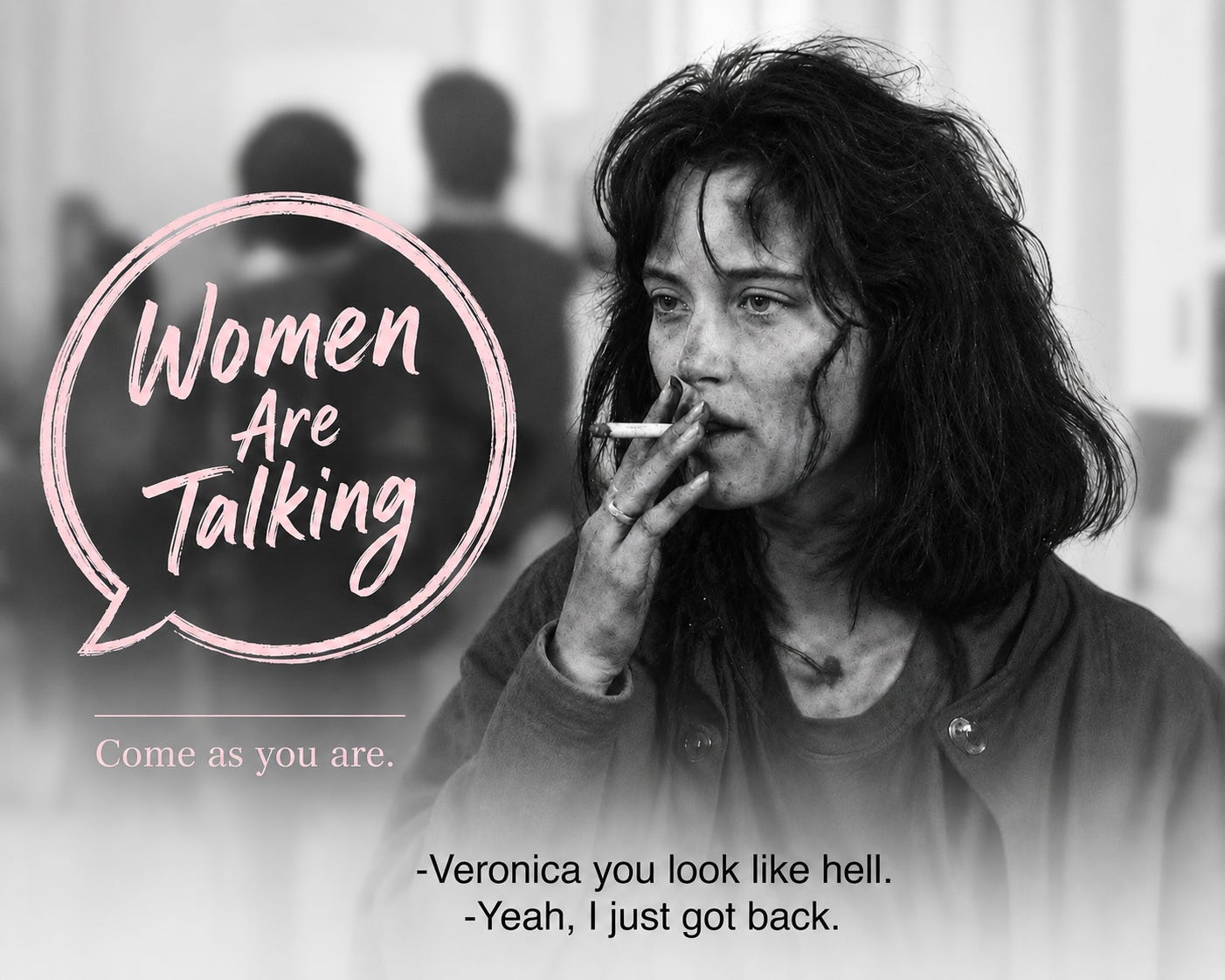
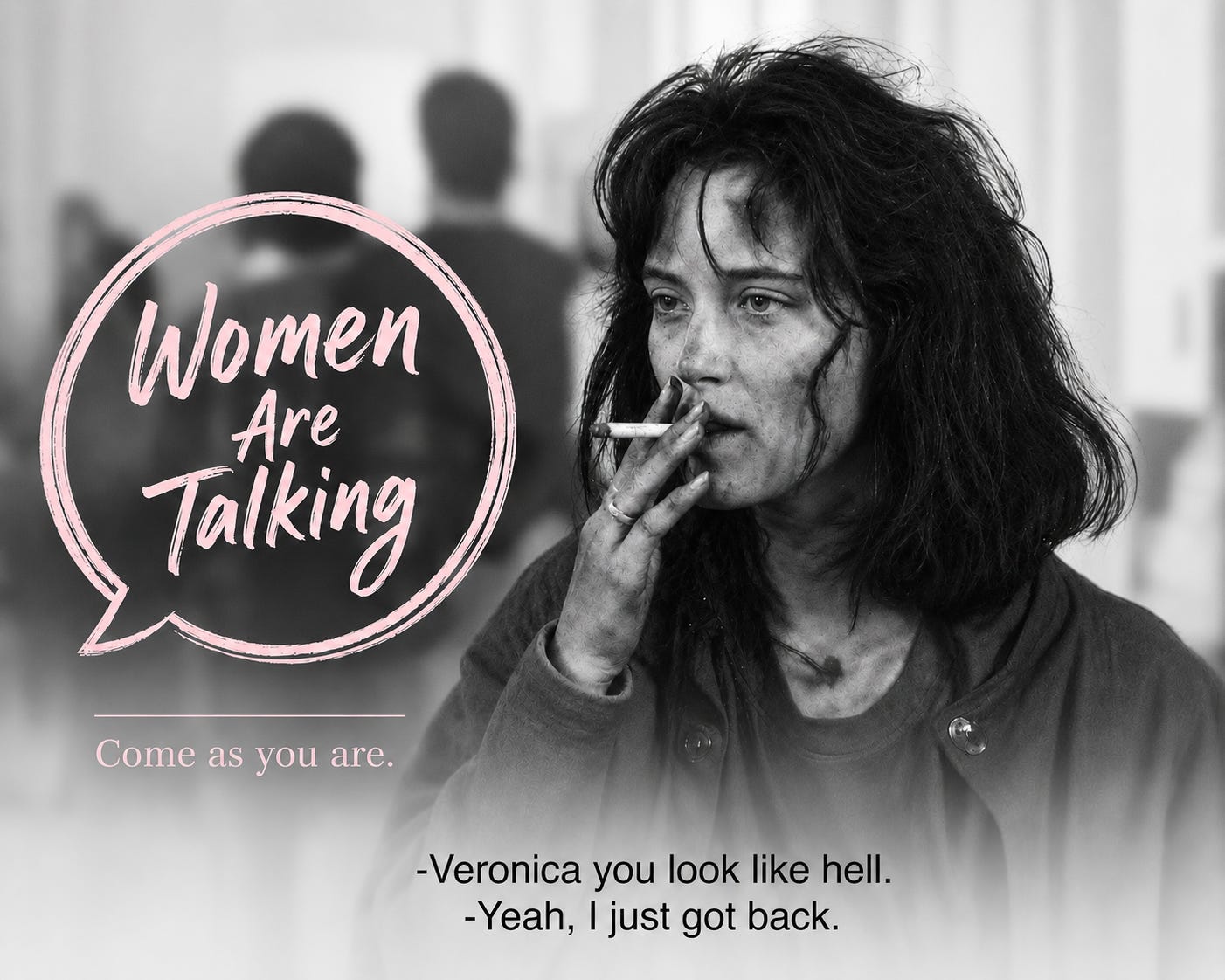
Women Are Talking had a wonderful launch in June. Our next Women Are Talking Zoom salon is Tuesday, July 28. 5 pm Mountain 7 pm Easter
We’ll continue exploring the kinds of questions todays’ essay raises together—not to arrive at answers, but to stay in the inquiry.
Click here to join us on Zoom.
One of the essays closest to my heart—one I’ve worked on for years—was published by KHÔRA Magazine, a publication I have long admired. Thank you to editor extraordinaire Leigh Hopkins. Given my conditioning and upbringing in a high control religious group, this piece has long weighed on my heart and was not easy to bring into the world: DANCING GIRL
Her teeth are perfect. Her mouth tinged purple. She reminds me of violets. Let’s call her Violet. You know I can’t remember her name.
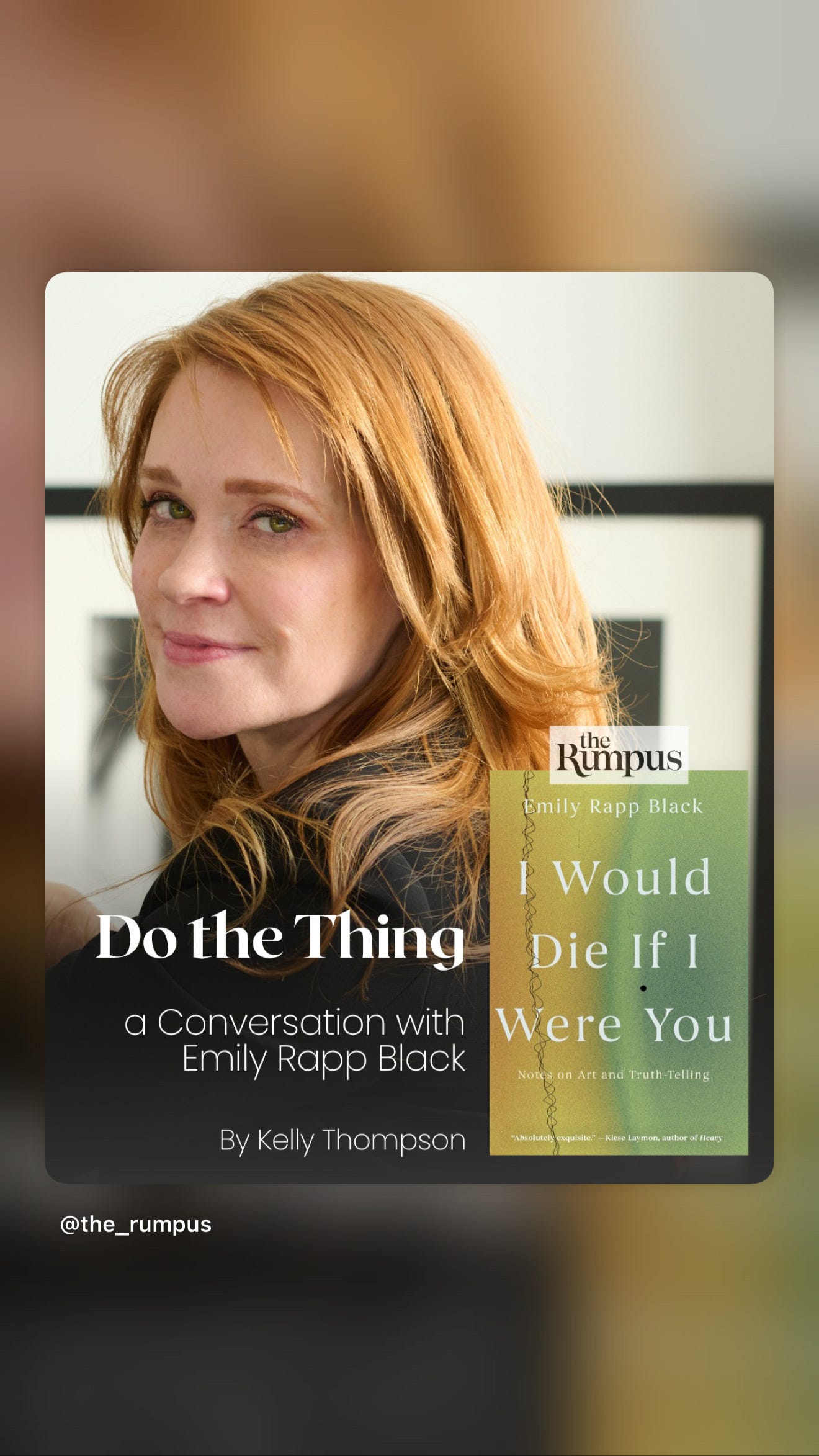
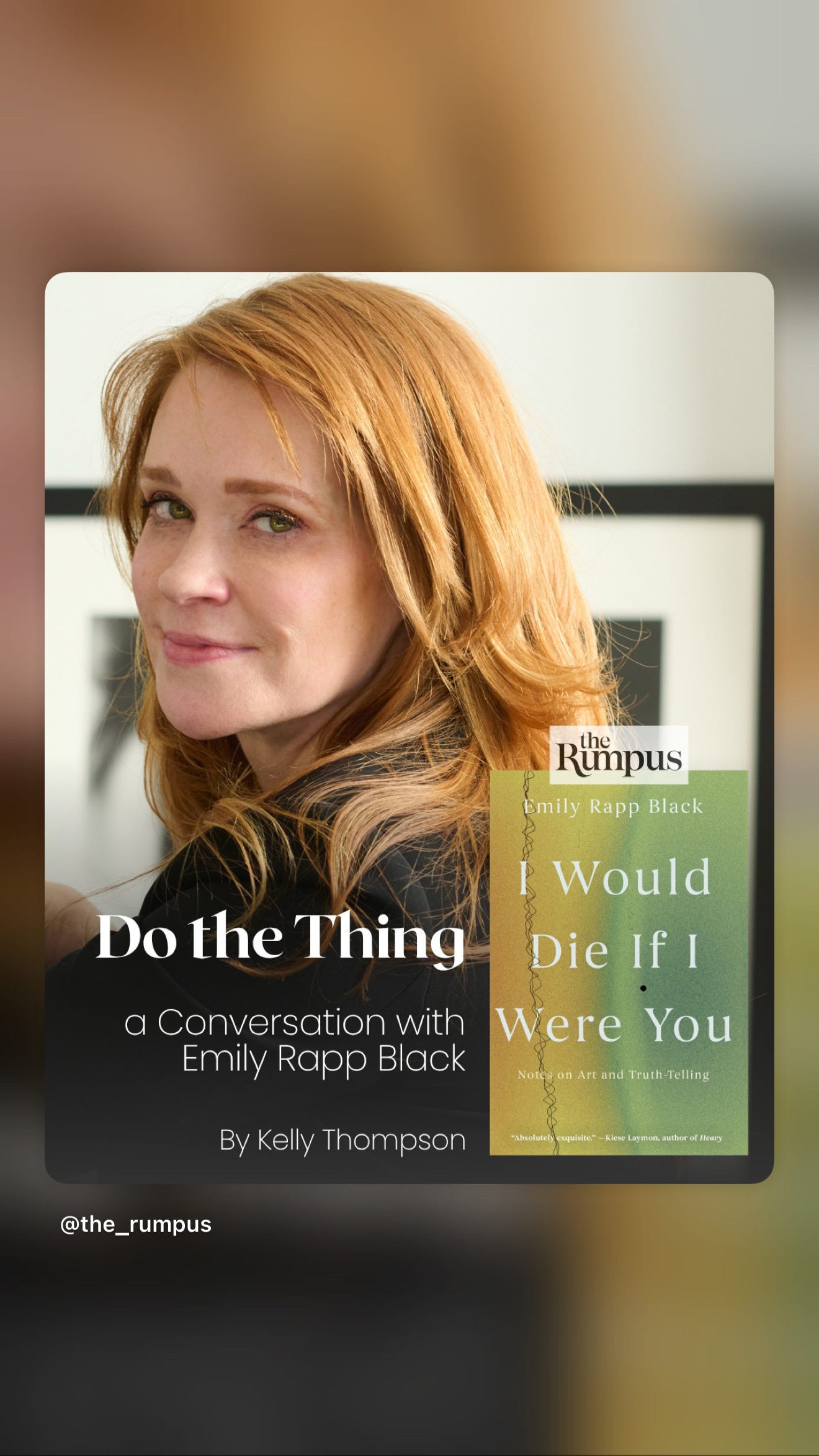
I interviewed Emily Rapp Black author of I Would Die If I were You: Notes on Art and Truth-telling for The Rumpus. One of the best books I’ve read in years.
Stay tuned for a livestream chat in August with Emily on There’s Nothing Wrong With You (And There Never Was) where we’ll talk sad stories, doing the thing, and about what’s wrong with us. 😉
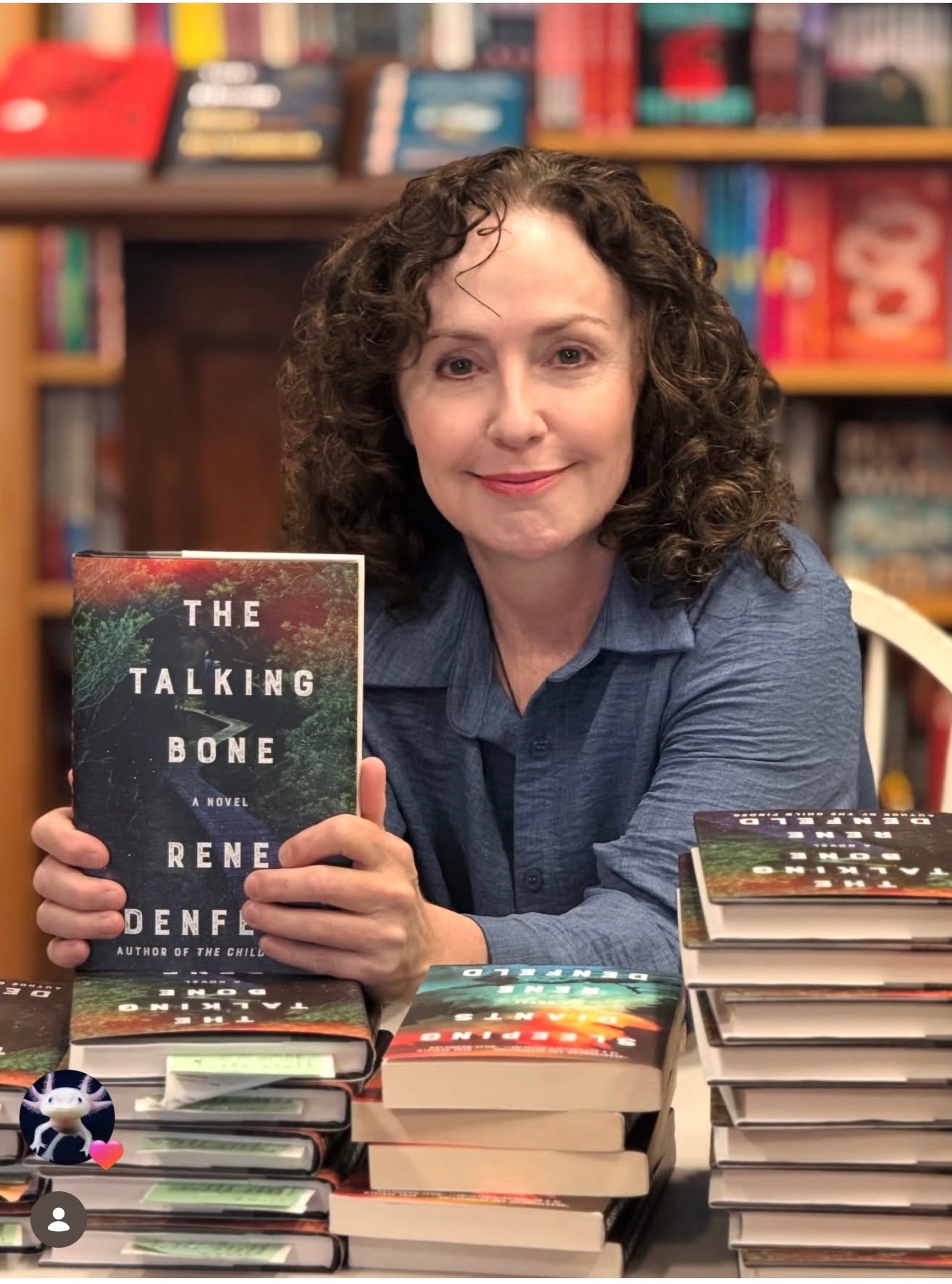
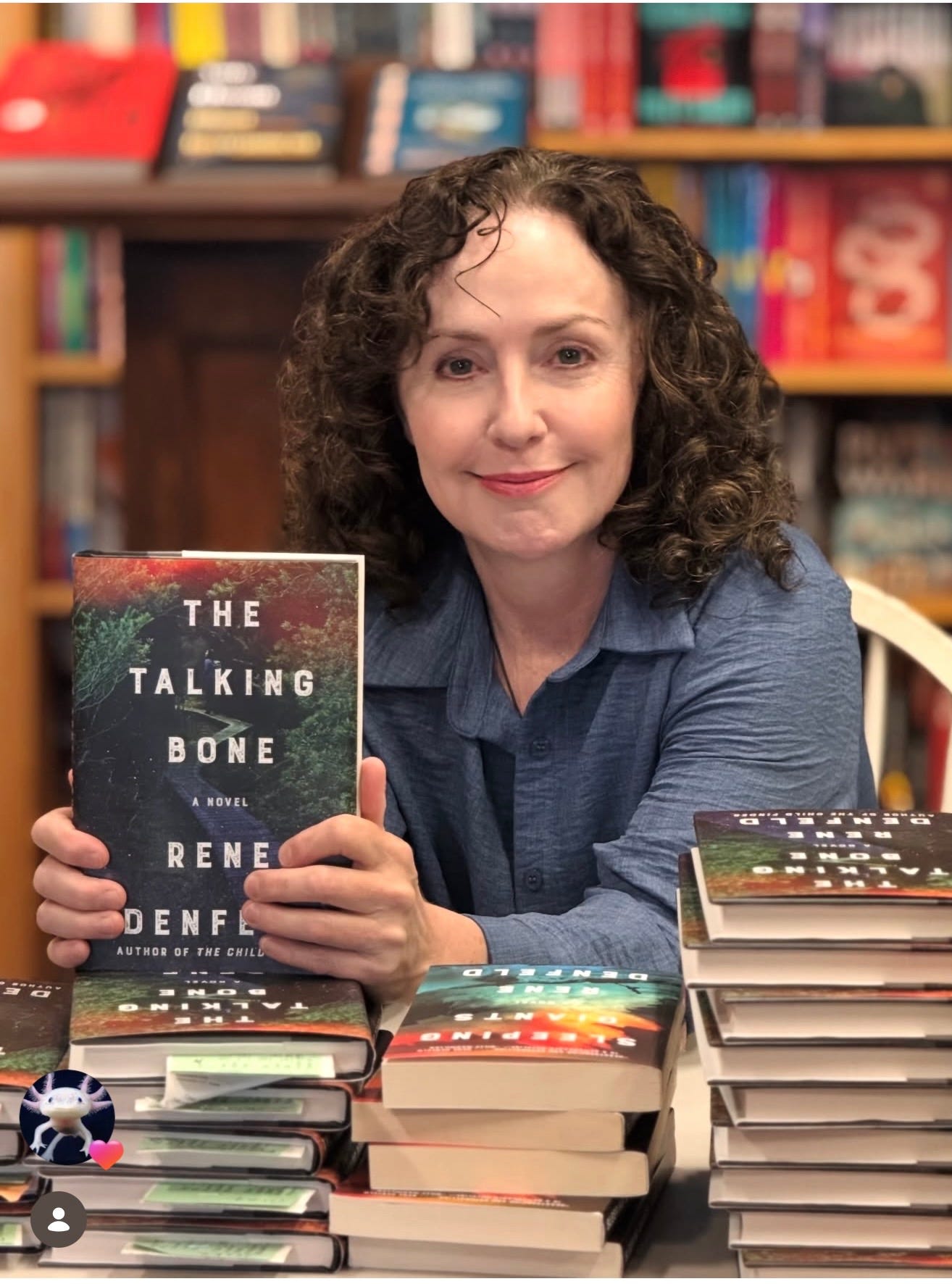
The Talking Bone: Rene Denfeld’s new book THE TALKING BONE is out. She is my favorite living fiction writer and I was thrilled to have her as a guest on my Women Are Talking podcast and livestream where we discussed her new book. I’ll be bringing Rene back for an expanded livestream edition. And you can read my print interview with her about her book THE CHILD FINDER here.
The W(HOLE) is currently accepting submissions. If you’d like to submit your work, send it to kellythompsontnwwy@substack.com.
And I can’t wait to introduce you to a new stunning voice in the August edition!
I’m adding a Books to Read bibliography to my High Control Groups: Resources and Support for Survivors page in the navigation bar on my website. Stay tuned. If you have a book recommendation—or would like your newsletter included—email me at kellythompsontnwwy@substack.com. You can expect thoughtfully curated, vetted resource.
CLOSE READINGS: My Conversations with Women Writers is now a featured section on TNWWY—look for the tab in my website’s navigation bar. Over the years, I’ve become known for in-depth conversations with women writers. I don’t think of them as interviews so much as meetings between two people who are genuinely curious about what it means to be human. Read my print conversations with authors including Lidia Yuknavitch, René Denfeld, Melissa Febos, Lacy M. Johnson, Christa Parravani, Gina Frangello, Terese Mailhot, and other literary supernovas. You’ll also find new work exploring their themes and voices, along with in-depth, behind-the-scenes close readings of their books for paid subscribers only.
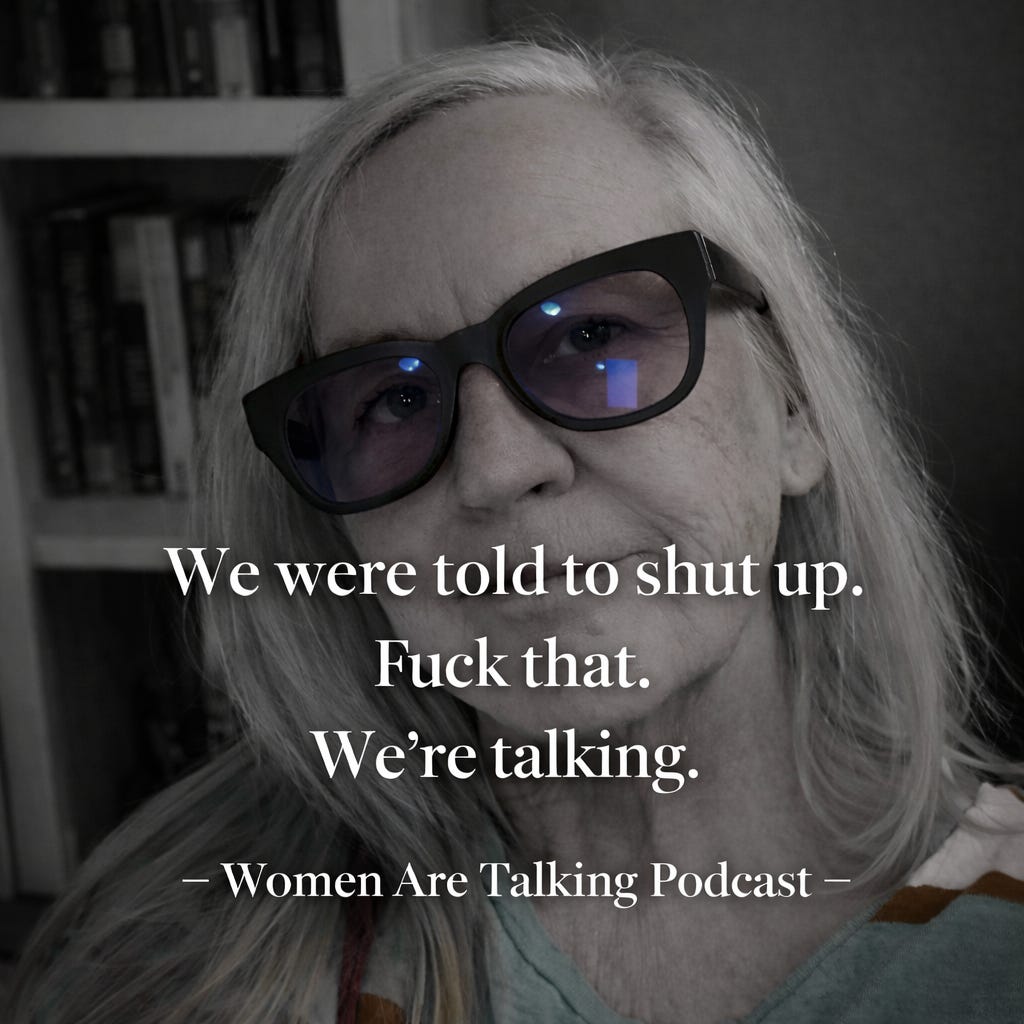
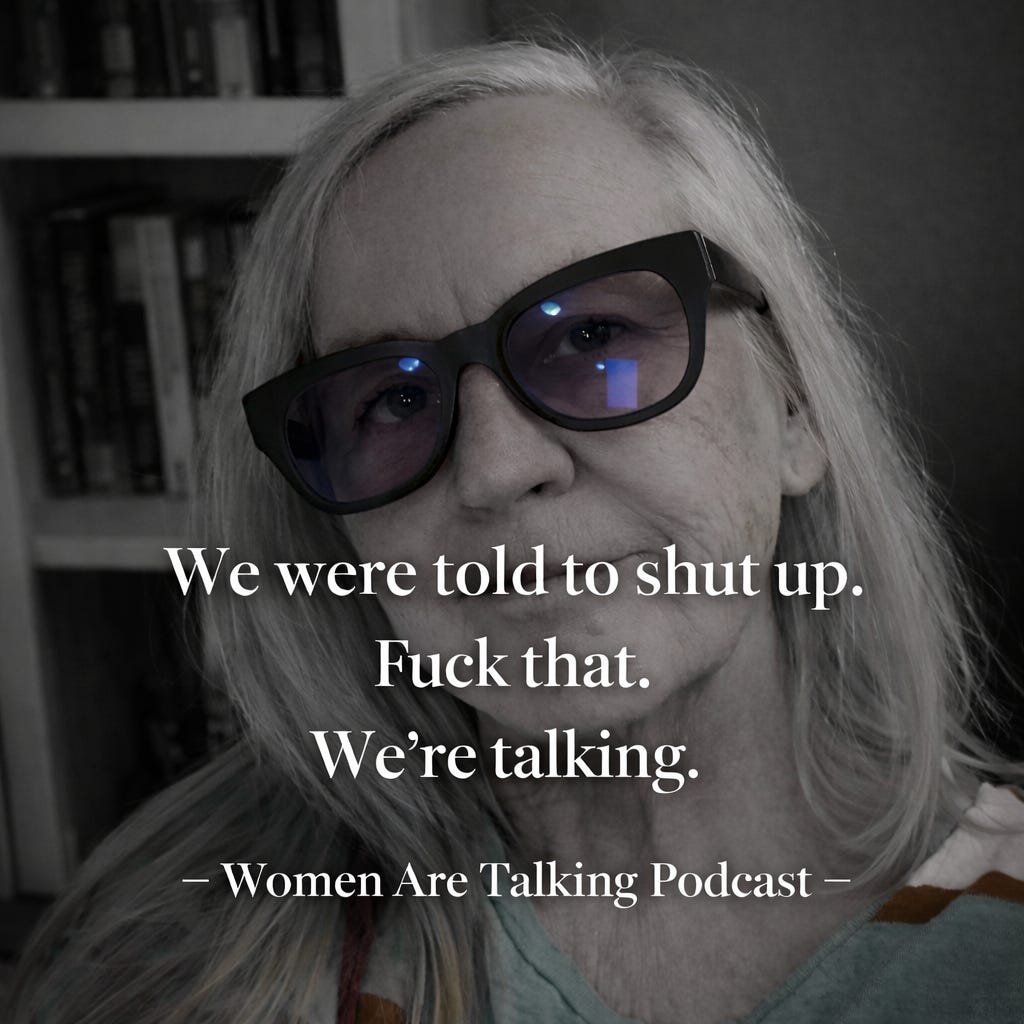
WOMEN ARE TALKING podcast and livestreams is another place you will find my live recorded conversations and interviews with powerful women authors like Michelle Dowd, and The Talking Bone: Rene Denfeld as well as convos with fascinating Substack publishers and survivors of the cult I was born and raised in. Coming soon: Emily Rapp Black, Mona Mona, and Deconstructing In Real Time with Meliesa Tigard. All in the works. Reach out if you think you’d be a fit.
Writing this update made me realize how much I’m doing! 🤯 Try it. We usually create and accomplish so much more than we realize until we write it all down in one place!
Writing from the deepest place in yourself is costly.
Many of these posts begin in places I would rather not go. They ask something of me before they ask anything of you.
Thousands of people read this publication every week. I’m grateful for every one of you.
Fewer than one hundred people financially support it.
Your subscription doesn’t just help me pay writers for The W(hole) or continue to host live salons.
It says: Keep going.
And sometimes that’s exactly what a writer needs to hear.
New annual paid subscribers through August will receive one of the engraved stones pictured below. It’s meant to be held. To remind you.
There’s nothing wrong with you.
And there never was.
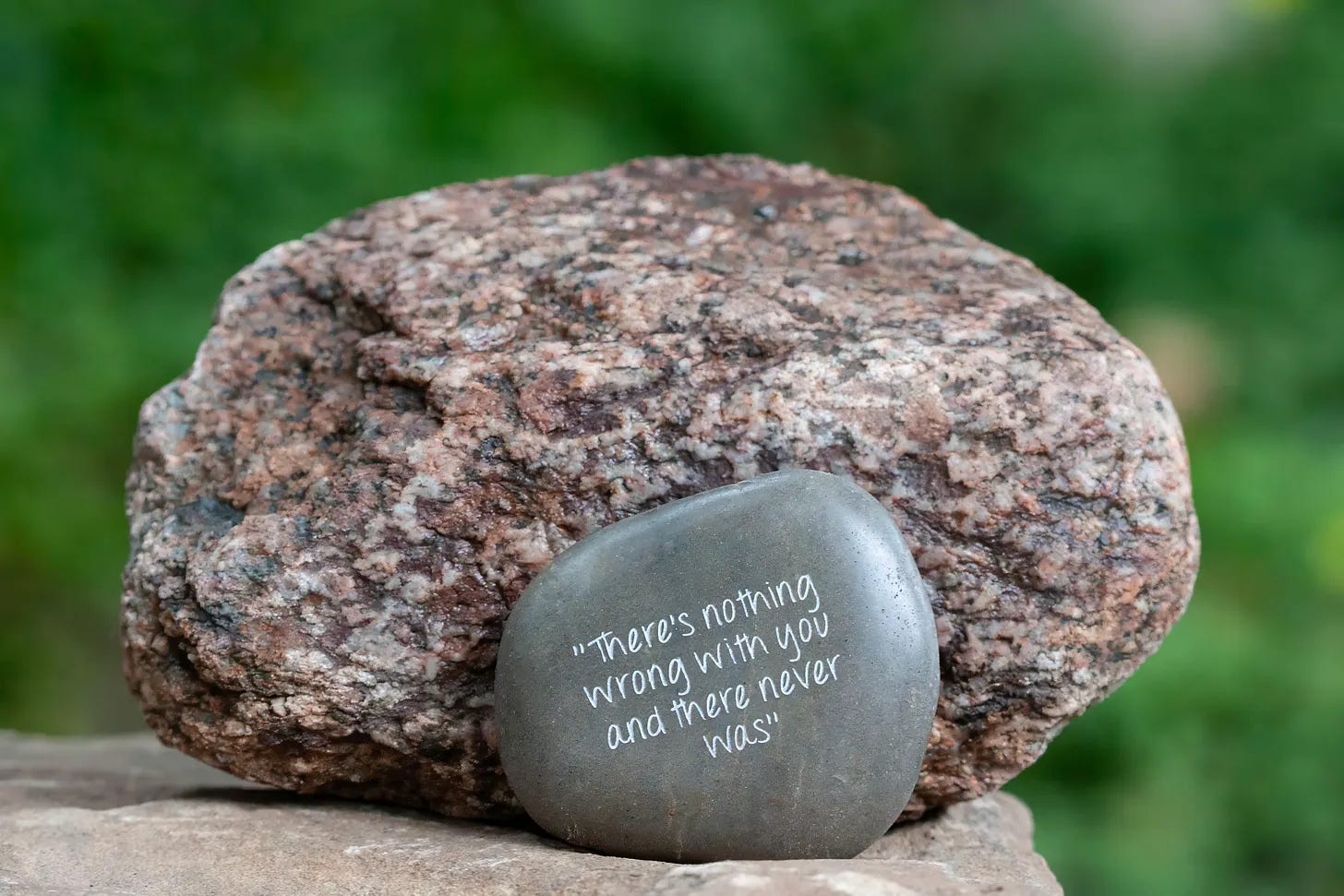
It’s more than my tagline.
It’s what I hope every person who finds their way here eventually comes to know for themselves.
After you become an annual paid subscriber, you’ll receive a welcome email from Substack. Just hit Reply with your mailing address, and I’ll send your stone with my gratitude. If you’re already a paid subscriber and would like a stone, just send me a DM or email when you renew.
Through August, annual subscriptions are 50% off ($15 for the first year).
That’s $15 for the entire year, now through August friends.
I’m 17 paid subscriptions away from bestseller status (100 paid subscribers). Reaching that milestone unlocks tools available only to Substack Bestsellers that help me cultivate this newsletter, reach more readers, and better serve you.
Thank you for walking these first two years with me.
Here’s to whatever comes next.
To what’s beneath the story.
$15 % off
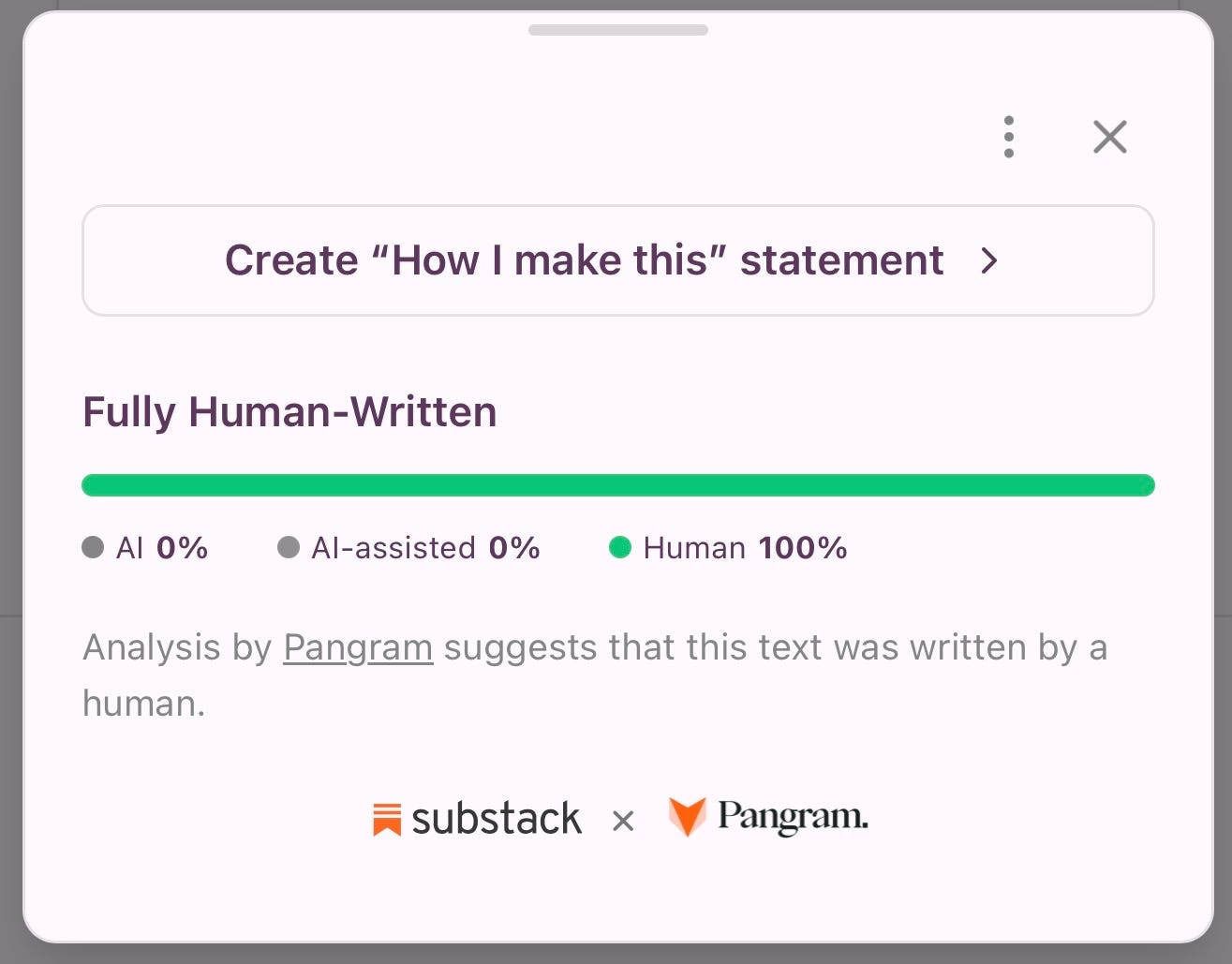
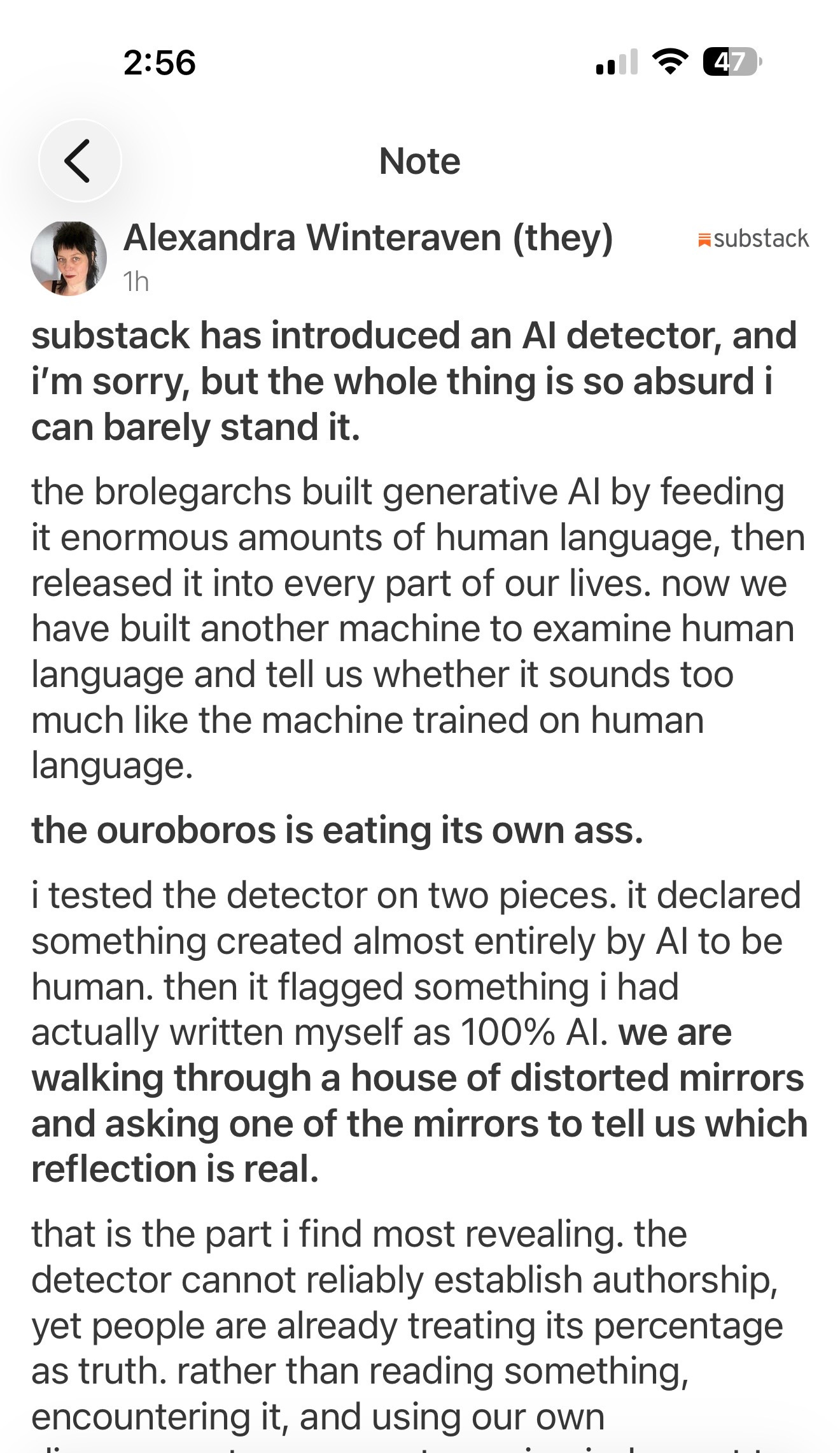
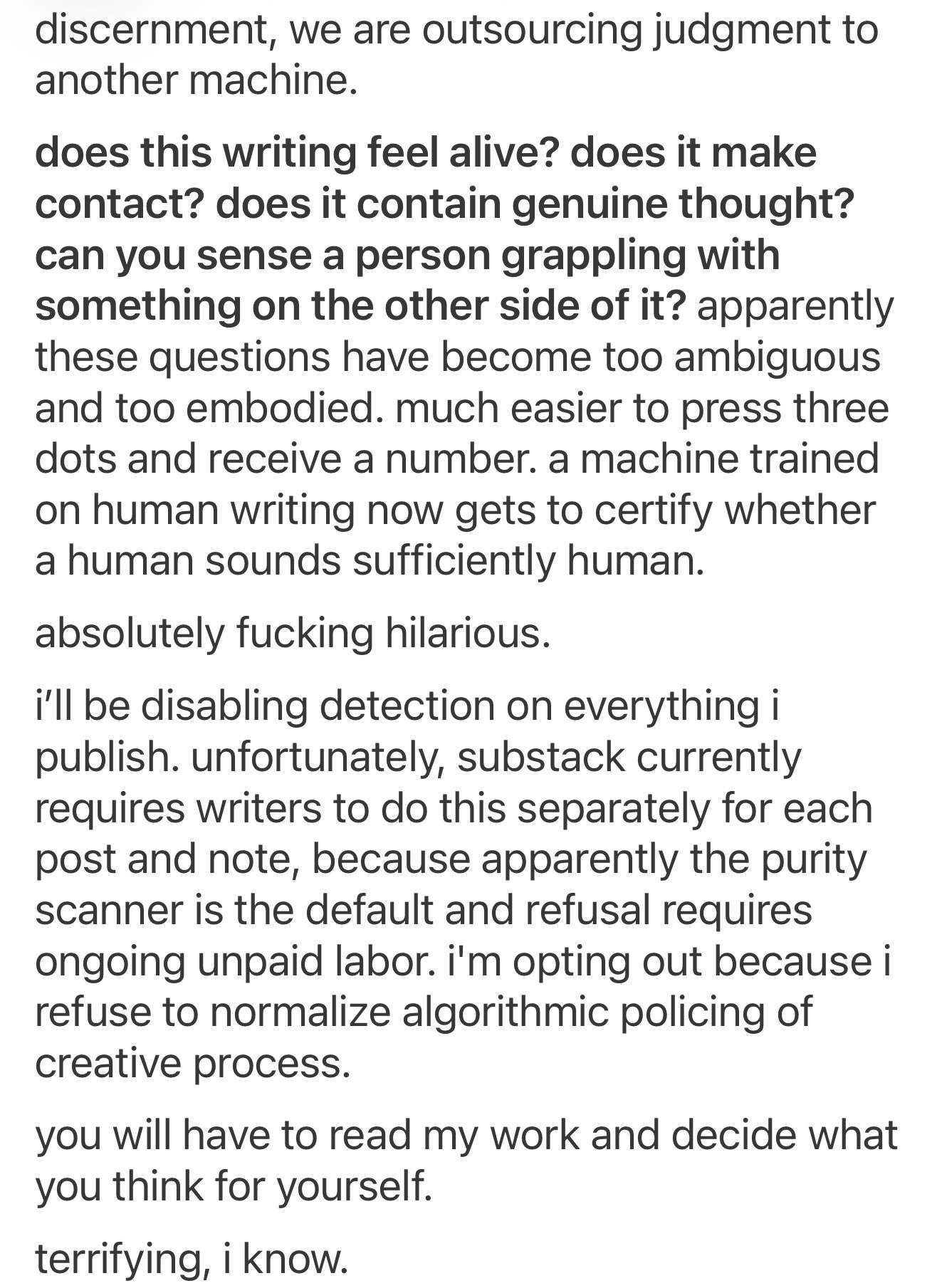
I scanned this once so you wouldn’t have to. I won’t be doing it again. I’m disabling the AI scan feature Substack has implemented because it conflicts with my principles. I’m conflicted about leaving it on for this post alone. But I will, so anyone who’s curious can see it for themselves. I hate that I’m put in a position of answering to Substack’s setup—which is a double bind.
I was born and raised in a high-control group and am quite familiar with social control and coercion.
When the choice is heaven or hell it’s not a choice.
Just so you know, Substack has launched an AI scan feature that enables readers to scan posts to see whether they were written with AI. There is no true opt-out—writers can disable it one post at a time, but the post is still marked as “scan disabled.”
Whatever I think about AI—or whether I use it at all—is beside the point.
I can’t in good conscience enable this kind of surveillance tool.
Related:
Subscribe to Alexandra Winteraven (they) whose Substack I recommend!
My AI policy going forward reflected here:
What she said:

Thank you a million times for this piece today, Kelly. I needed it so much.
This really stayed with me. The idea that we inherit stories long before we realize they’re stories feels so true. There is so much courage in examining the narratives that shaped us and finding our way back to our own voice. (as for AI letting me know that my work is written by a human when it's scanned, still digesting that one!)